Is This Golf Cart Street Legal? Where Can You Drive an LSV?
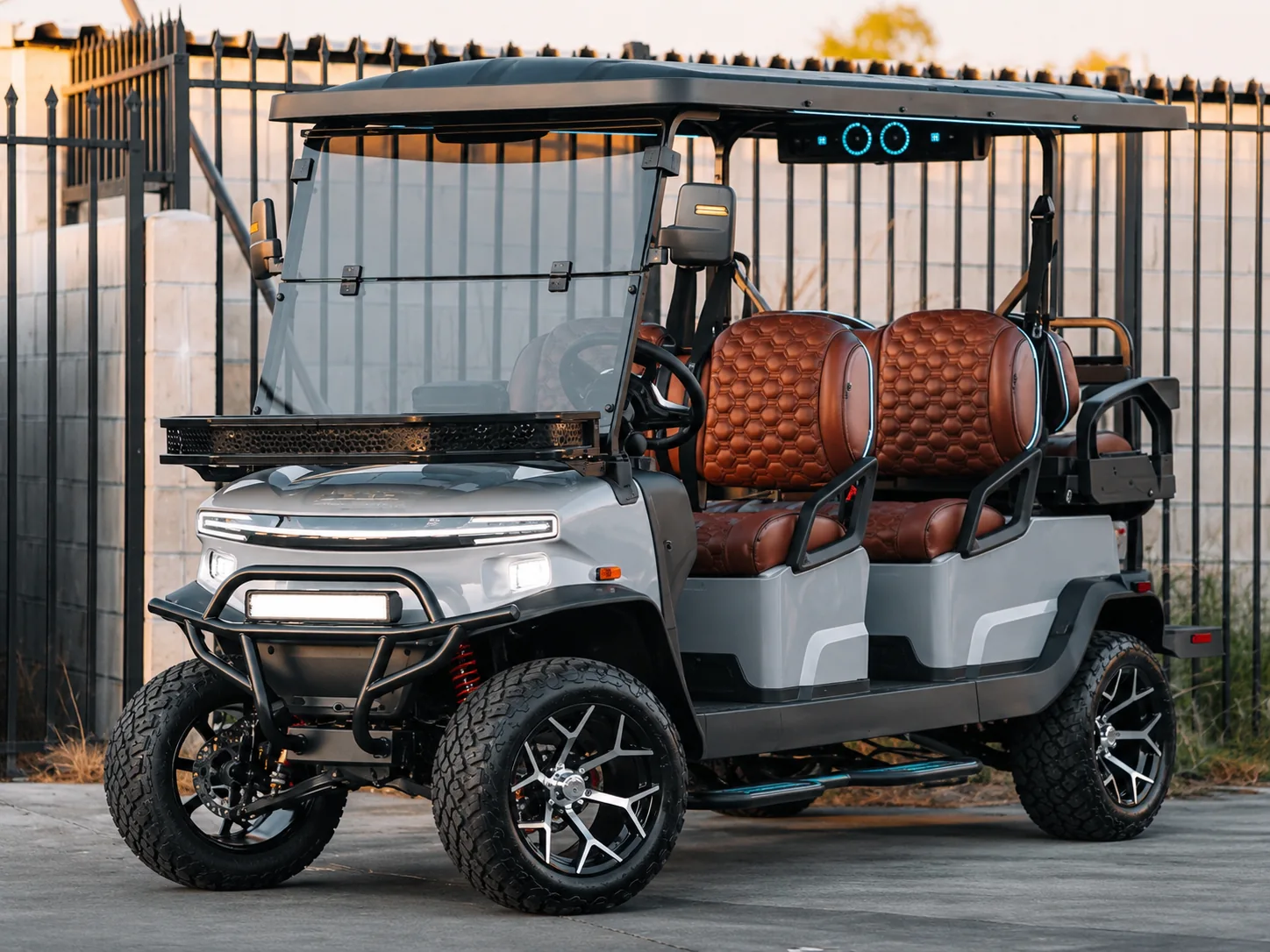
A cart can look ready for the street and still be the wrong vehicle for the trip you have in mind. Before buying, check three things: what the vehicle is certified as, what paperwork and insurance you need, and whether every part of your route allows it.
Maybe you want to visit friends a few blocks away, take a short trip to a restaurant, or leave the family car parked more often. It is easy to picture the fun part. The question to settle first is simple: “Can I actually drive this cart where I want to go?”
For buyers around Costa Mesa, Newport Beach, Huntington Beach and the Phoenix area, the answer takes more than a salesperson saying “street legal.” Here is what to check before you pick a color or sign the paperwork.
A golf cart and an LSV can look almost the same
LSV stands for low-speed vehicle. It is a vehicle category with specific requirements. In California, that includes four wheels, the ability to reach more than 20 mph but no more than 25 mph within a mile on a level paved surface, and a gross vehicle weight rating below 3,000 pounds. That weight rating means the vehicle’s rated maximum loaded weight, not just what it weighs empty.
“Golf cart” and “personal transportation vehicle,” or PTV, are also common shopping terms. Neither term, by itself, tells you that the vehicle qualifies as an LSV. Headlights, mirrors and attractive wheels do not settle that question either.
California CHP guidance says a vehicle must be certified by its manufacturer as meeting the federal LSV standard to be registered or operated as an LSV. A light kit or faster controller does not replace that certification. CHP explains the distinction in its low-speed vehicle guidance.
Ask to see the paperwork for the cart you are buying
Use this question at the dealership: “Can you show me the certification and registration documents for this particular vehicle?”
Ask the team to walk you through the manufacturer’s certification label, vehicle identification number and the ownership documents supplied with the sale. For a new vehicle, ask about its manufacturer’s certificate of origin; for a used one, ask to see the title and available registration history. Have the dealer explain any mismatch or missing document before you commit.
The federal equipment standard covers lighting, reflectors, mirrors, a parking brake, a compliant windshield, a vehicle identification number and a seat belt at each designated seating position. It also includes rear-visibility and applicable alert-sound requirements. A quick look at a photograph cannot confirm all of that. You can read the requirements in Federal Motor Vehicle Safety Standard 500.
One useful distinction: manufacturers certify compliance with the applicable standards. Do not treat a casual claim that a cart is “government approved” as a substitute for the vehicle’s documents. NHTSA explains how manufacturer certification works.
Where can you legally drive an LSV?
Start with the posted speed limit on each road, then check the local rules. A destination being close to home does not guarantee you can reach it by cart. The connecting road may be the problem.
California: check the whole route
The usual road-speed limit for LSV travel is 35 mph or less. California DMV describes this restriction in its driver handbook. That does not give you permission to use every road, path or property you can reach.
California has limited exceptions for certain crossings and adopted NEV transportation plans. Under Vehicle Code 21260, a crossing of a faster road generally must connect roads posted at 35 mph or less and meet at roughly a right angle. An uncontrolled crossing of a state highway needs specific approval. See the text of section 21260 and have the local traffic authority confirm any crossing you intend to use.
In Costa Mesa, Newport Beach or Huntington Beach, bring the actual street names to that conversation. “Near the beach” or “inside my neighborhood” is not enough information to establish a legal route.
Arizona: the NEV rules are specific
For a neighborhood electric vehicle, or NEV, Arizona limits operation to 25 mph and prohibits driving along a road posted above 35 mph. Crossing a faster road at an intersection is allowed under that rule. The operating restrictions must also be permanently displayed where the driver can see them. These requirements come from Arizona Revised Statutes 28-966.
Do not apply that NEV rule automatically to every vehicle sold as a golf cart. Confirm the specific classification first, then check the streets and intersections you plan to use around Phoenix or nearby communities. Our Phoenix golf cart route guide offers another starting point.
What about registration, insurance and a driver’s license?
For ordinary public-road use in California, plan on a valid driver’s license, current vehicle registration and proof of financial responsibility. CHP notes that limited registration exceptions exist for certain locally authorized operations; check with DMV before relying on one.
In Arizona, confirm the title and registration requirements with MVD for the vehicle you are buying. ADOT says liability insurance is required for vehicles driven on Arizona roads, including golf carts. Scottsdale’s local guidance also calls for registration, insurance and a licensed driver when these vehicles are used on a roadway.
Ask your insurer for coverage on the actual vehicle and the way you will use it. Then ask the dealer which title and registration steps it handles, which steps are yours, and when you will have the documents needed to drive.
Try this before your test drive
- Write down two or three trips you would really make. Use addresses or street names, not just the name of your neighborhood.
- Trace every road and crossing. Check posted limits and ask the city traffic department or local police about restrictions and approved crossings. A normal car-navigation route is not an LSV route approval.
- Check private access separately. Ask your HOA, golf course or property manager about its rules. Do not assume that street registration grants access to sidewalks, trails or golf paths.
- Bring your passenger and parking needs. Try the seats, check entry height and make sure the cart fits where you will keep and charge it.
- Get a complete written quote. Include the vehicle, selected accessories, taxes, dealer charges, registration costs and any delivery you need.
Three questions worth asking before you buy
If it goes 25 mph, is it automatically street legal?
No. Speed is only part of the classification. You still need to verify certification, equipment, paperwork and permission to use your route.
Can I make a regular cart street legal by adding lights?
Do not assume so. In California, CHP says conversion to LSV status must be accomplished and certified by the manufacturer. Get a clear answer about the exact vehicle before paying for an upgrade.
Does “street legal” mean it protects me like a car?
No. NHTSA explains that LSVs are not subject to the same demanding crashworthiness standards as passenger vehicles. A legal route still deserves a careful look at traffic, visibility and conditions.
Bring us the trip you want to take
The best cart is one you can use for the life you actually lead. Start with the route, then compare the vehicles that fit.
Visit Coastal Carts Costa Mesa at 518 W 19th St, Costa Mesa, CA 92627, or call (949) 335-7300. Bring the listing you like, your passenger count and the trips you have in mind. Our team can review the vehicle’s equipment and paperwork with you while you confirm road access with the appropriate local agency.
Shopping elsewhere in Southern California or the Phoenix area? Contact Coastal Carts to connect with your local showroom.
Information checked November 7, 2026. Rules and local permissions can change; confirm your vehicle and intended route with DMV or MVD and the responsible local authority before driving.