Street-Legal Golf Carts in San Diego: What You Need to Know
Street-Legal Golf Carts in San Diego: What You Need to Know
Street-legal golf carts have become a practical form of local transportation in many San Diego neighborhoods. In areas built around lower speed limits and short travel distances, these vehicles serve a clear purpose for daily errands, community travel, and coastal living. Golf carts in San Diego are now firmly established on public roads, but only when they meet California’s legal standards. For experienced owners and informed buyers, understanding those requirements is essential to using a golf cart confidently and without interruption.
Understanding Street-Legal Golf Carts and California Law
California law defines street-legal golf carts under the low-speed vehicle classification. An LSV is a four-wheeled vehicle capable of sustained speeds between 20 and 25 miles per hour. That speed range is a legal threshold, not a guideline. Golf carts that fall below it are limited to private property unless they are properly manufactured or converted to meet LSV standards. In San Diego, enforcement agencies rely on classification and documentation rather than appearance when determining legality.
Buyers should approach this distinction carefully. A cart described as “street capable” does not automatically qualify for public road use. To operate legally, it must meet all LSV requirements and be recognized as such under California law. Overlooking this step often leads to registration delays or restrictions later.
All street-legal golf carts in San Diego must be registered through the California Department of Motor Vehicles. Registration includes titling the vehicle, obtaining license plates, and carrying insurance that meets California’s minimum liability standards. These steps are mandatory. A golf cart without registration or insurance is not permitted on public roads under any circumstances.
Vehicle identification is equally important. LSVs must have a valid vehicle identification number accepted by the DMV. This VIN is required for registration, insurance coverage, and law enforcement identification. Golf carts without proper identification are restricted to private property, regardless of equipment or appearance.
Required Safety Equipment and Road Access in San Diego
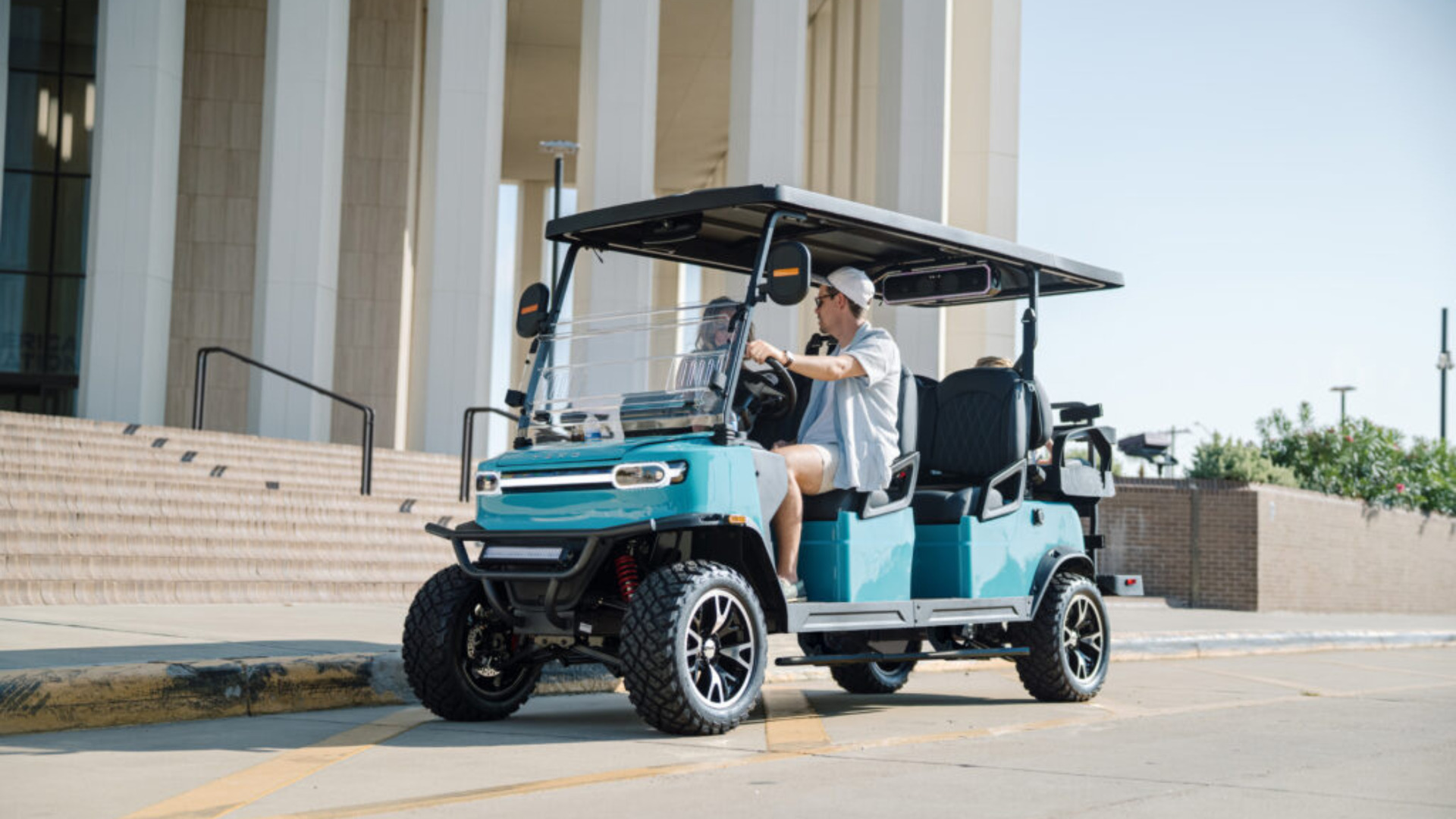
California law outlines specific safety equipment required for street-legal golf carts, and San Diego enforces these standards consistently. An LSV must be equipped with headlights, taillights, brake lights, front and rear turn signals, reflectors, rearview mirrors, seat belts for all seating positions, and a windshield. These features allow golf carts to operate predictably alongside passenger vehicles, cyclists, and pedestrians.
In San Diego’s residential and coastal areas, visibility and signaling are especially important. Golf carts often operate in shared-use environments where foot traffic and bike lanes are common. Proper lighting and mirrors help drivers remain aware of their surroundings while allowing other road users to anticipate movement.
Street-legal golf carts are permitted only on roads with posted speed limits of 35 miles per hour or less. They may cross higher-speed roads at intersections but may not travel along them. This restriction defines how Golf Carts San Diego are used day to day. Neighborhood streets and community roads provide suitable access, while freeways and major arterial roads remain prohibited.
Understanding these limitations helps owners plan routes efficiently. Golf carts are intended for local travel rather than long-distance commuting, which aligns well with how many San Diego neighborhoods are designed.
Ownership, Operation, and Everyday Use
San Diego’s climate supports year-round golf cart use, particularly for electric models. Electric street-legal golf carts offer quiet operation, minimal maintenance, and convenient charging at home using standard electrical outlets. These characteristics make them well suited for frequent short trips within a neighborhood.
From a cost perspective, Golf Carts San Diego typically serve as a secondary vehicle. Insurance costs are generally lower than those of passenger cars, maintenance requirements are modest, and electricity costs remain predictable. For many households, this makes a golf cart a practical solution for local mobility rather than a replacement for a primary vehicle.
Drivers of street-legal golf carts are held to the same standards as other motorists. A valid California driver’s license is required, and all traffic laws apply. Speed limits, stop signs, right-of-way rules, and signaling requirements must be followed at all times. Driving under the influence carries the same penalties as it would in a passenger vehicle.
Parking regulations also apply. Golf carts must be parked in legal spaces and may not block sidewalks, driveways, or access points. Responsible parking supports continued acceptance of golf carts as part of San Diego’s transportation mix.
Customization remains popular among local owners, particularly in coastal communities. Upgrades such as improved seating, enclosures, wheels, and audio systems are common. Any modification must preserve required safety equipment and visibility. Enhancements should improve comfort and usability without affecting compliance.
Street-legal golf carts have become a familiar sight across San Diego as more residents look for efficient ways to handle short trips. When used correctly and in compliance with local laws, they offer a dependable option for neighborhood and community travel. Understanding what qualifies as street-legal and how those requirements apply locally can make the buying process much smoother. Coastal Carts RMV helps buyers navigate vehicle selection, registration considerations, and safety requirements with clear, practical guidance. Contact us today to explore street-legal options built for San Diego roads and get informed support along the way.