Golf Cart Seats in Southern California: One More Look at What Really Matters
Ask a golf cart owner what they love about their ride and you’ll hear about the battery, the lift kit, the sound system. Ask them what they feel every single day, and the answer is much simpler: the seat. Golf cart seats rarely make the headlines. Yet they decide whether a quick errand feels effortless, whether a neighborhood cruise turns into a 20-minute joyride, and whether passengers climb in with a smile or a sigh. At Coastal Carts RMV, we’ve watched buyers walk the showroom floor, sit in cart after cart, and make their decision in seconds. The seat is often the deciding factor.
Here’s what’s worth knowing before you buy, upgrade, or customize.
Why the Seat Matters More Than You Think
A golf cart is a short-hop vehicle, but short hops add up. Trips to the beach, the clubhouse, the farmers market, the neighbor’s driveway: a typical week can mean dozens of rides. A seat that’s too firm, too flat, or too hot in the summer sun turns every one of those trips into a small annoyance.
A good seat does three jobs at once: it supports the rider, it holds up to California sun and Arizona heat, and it makes the cart look finished and intentional.
Bench Seat vs. Bucket Seat: Which Is Right for You?
Bench seats are the classic choice. They are simple, roomy, and easy to slide into from either side. They suit relaxed community cruising and families who like to ride close together.
Bucket-style seats add contour and side support. Riders sit a little more “in” the cart than “on” it, which many people find more comfortable on longer rides and on carts with more spirited handling.
Neither is better. It comes down to how you ride, who rides with you, and how the cart looks to you.
The Rear Seat Trick: Two Carts in One
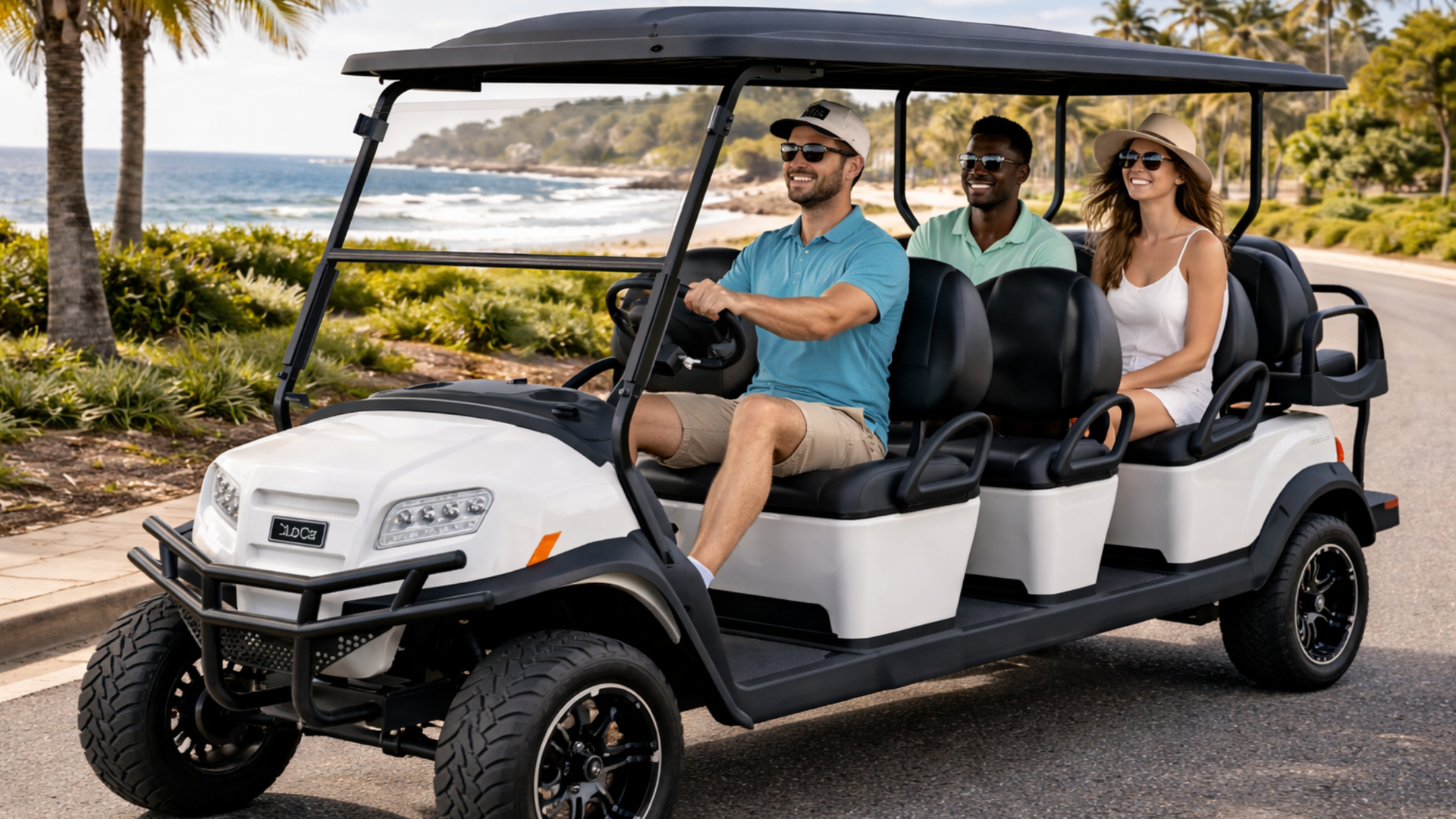
One of the smartest features in the golf cart world is the flip-flop rear seat. Fold it one way and it carries passengers facing backward. Fold it the other way and it becomes a cargo deck for golf bags, groceries, beach gear, or work supplies.
Street-Legal Carts and Seat Belts
In California, street-legal low-speed vehicles are built with seat belts, and that changes how seating is designed. Belts need secure anchoring and every seating position needs to be set up properly. If you plan to drive your cart beyond the golf course or the neighborhood, ask about seating and safety equipment before you buy, not after.
Custom Seats: Where Personality Shows Up
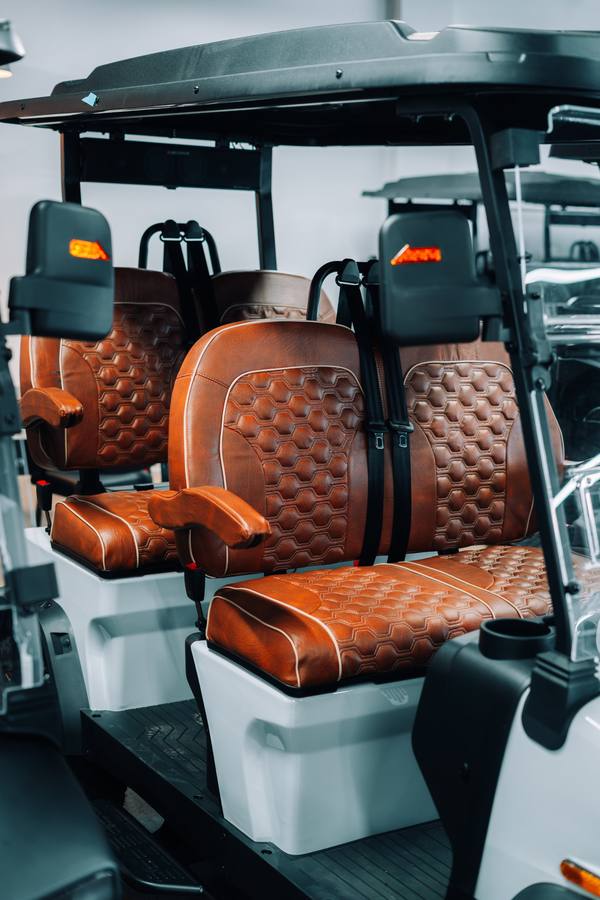
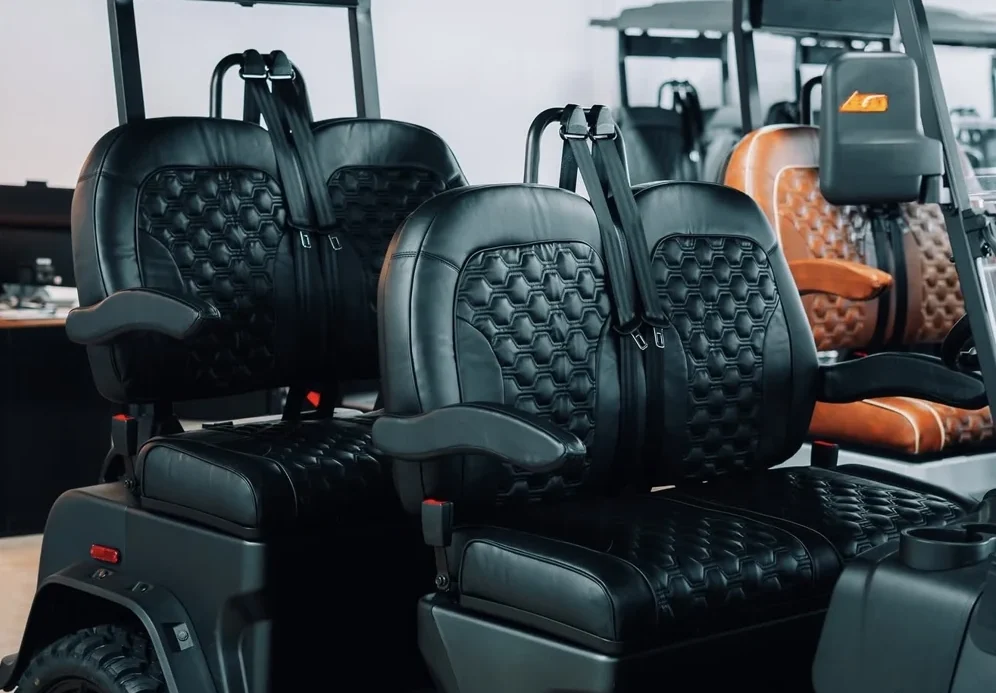
Seats are one of the fastest ways to make a cart unmistakably yours. Custom builds can include different colors, two-tone designs, stitched patterns, and upgraded materials that tie into wheels, body color, and accessories.
We’ve built custom carts for clients who wanted every detail to match, from seats to wheels to lighting. When the seat is part of a complete design, the whole cart looks like it came out of a showroom magazine.
Seat Height, Lift Kits and Getting In and Out
Planning a lift kit? Your seat experience changes with it. A higher cart means a bigger step up, which matters for children, older riders, and anyone with limited mobility. Many owners add steps or grab handles alongside a lift for exactly this reason. It’s another reason to think of the cart as a complete system rather than a pile of parts.
How to Keep Golf Cart Seats Looking New:
1. Wipe them regularly. Dust and grit scratch vinyl over time.
2. Use a gentle cleaner. Harsh chemicals can dry out the surface.
3. Park in shade or use a cover. Sun is the biggest enemy of any seat.
4. Fix small tears quickly. A small split spreads fast once water gets into the foam.
The best way to choose a seat is to sit in it. Come see the carts in person, compare layouts side by side, and ask our team about seating, comfort and custom options.