Is a 72V Golf Cart Worth It on Hills?
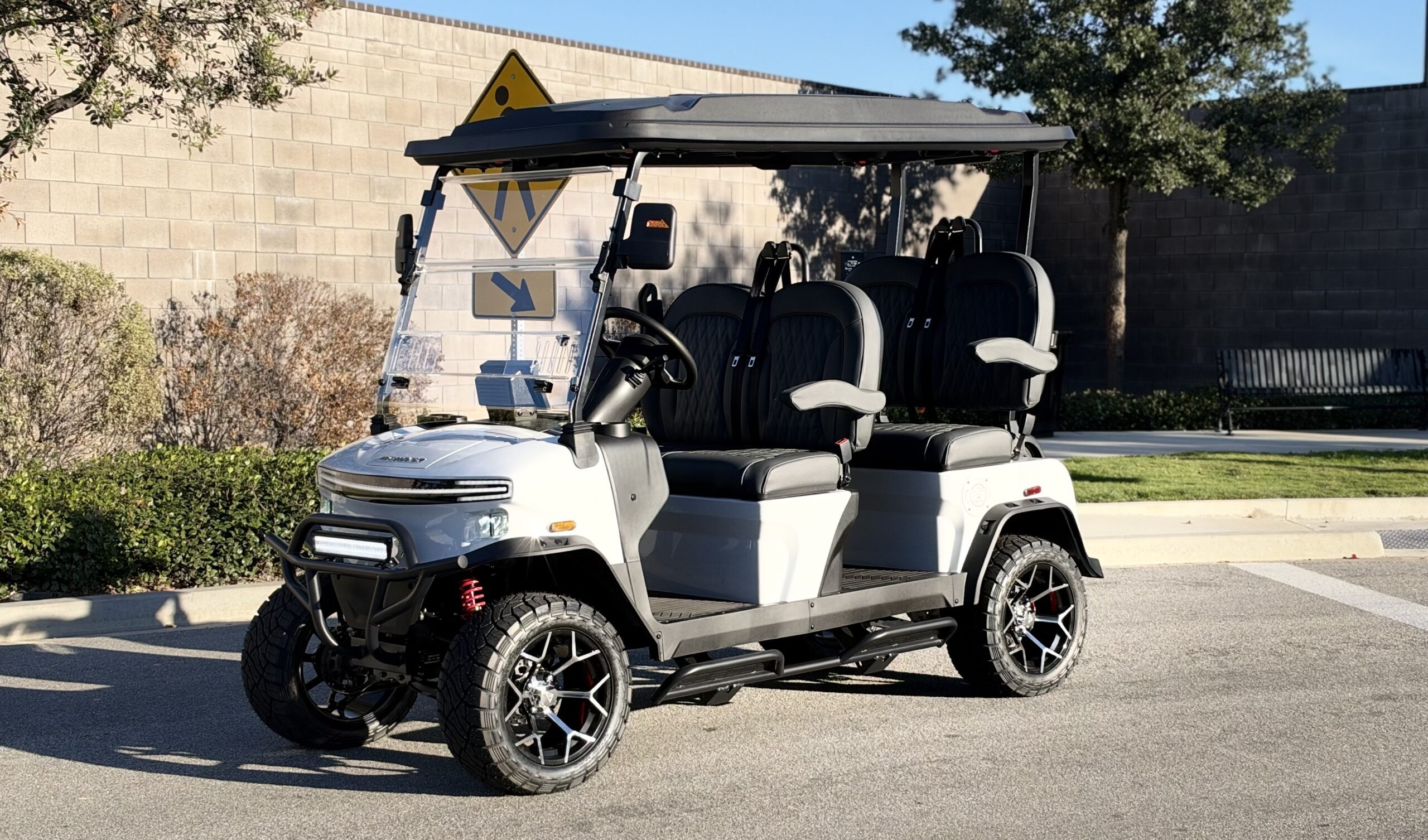
A flat parking lot can make two golf carts feel much the same. Put four people aboard and head uphill, and you’ll learn more. A 72-volt (72V) golf cart can draw less current from its battery than a 48V cart doing the same work. Here’s why that matters on a climb and what to compare before you buy.
What changes between 48V and 72V?
Picture two carts each drawing 7.2 kilowatts from the battery. At 48 volts, that takes 150 amps. At 72 volts, it takes 100 amps. The 72V system carries the same power with one-third less battery current. With equal cable resistance, less power is lost as heat in the battery cables. A manufacturer can also use the higher voltage to deliver more power at the same battery-current limit. See the electrical math.
Where you can feel it on a hill
If the motor and controller can use the extra power, a 72V cart can have an easier time holding its pace on a long climb with passengers. On a test drive, try two things on the same approved route. First, feel how smoothly each cart pulls away on an incline. Then see how well it holds speed up a longer grade. Gearing and controller tuning matter for the start. For a sustained climb, ask about the motor’s continuous power rating and the grade the manufacturer recommends for your passenger load.
A shopper in a golf cart Facebook group asked whether a 72V cart was worth considering for a hilly neighborhood. On Reddit, a shopper comparing a used 72V E-Z-GO with 48V models asked what the higher voltage would buy. If you’re shopping used, ask how the installed battery performs under load before comparing carts on a hill. The hilly-route question · The used-cart discussion.
How far will it go, and how fast?
For range, compare usable kilowatt-hours (kWh). If two packs each provide 7 kWh of usable energy, they start with the same energy budget. A steeper route or more passengers can use it up sooner. When a dealer quotes mileage, ask how many people were aboard and what terrain the test covered. Rolls Battery’s guide to capacity and range.
Top speed is a separate specification. E-Z-GO’s 2018 72V Express S6 and L6 let drivers select a maximum of 12 or 16.5 mph on the very same powertrain. Ask for the speed setting on the exact cart you’re considering. E-Z-GO’s original Express specifications.
A 72V model to compare at Coastal Carts
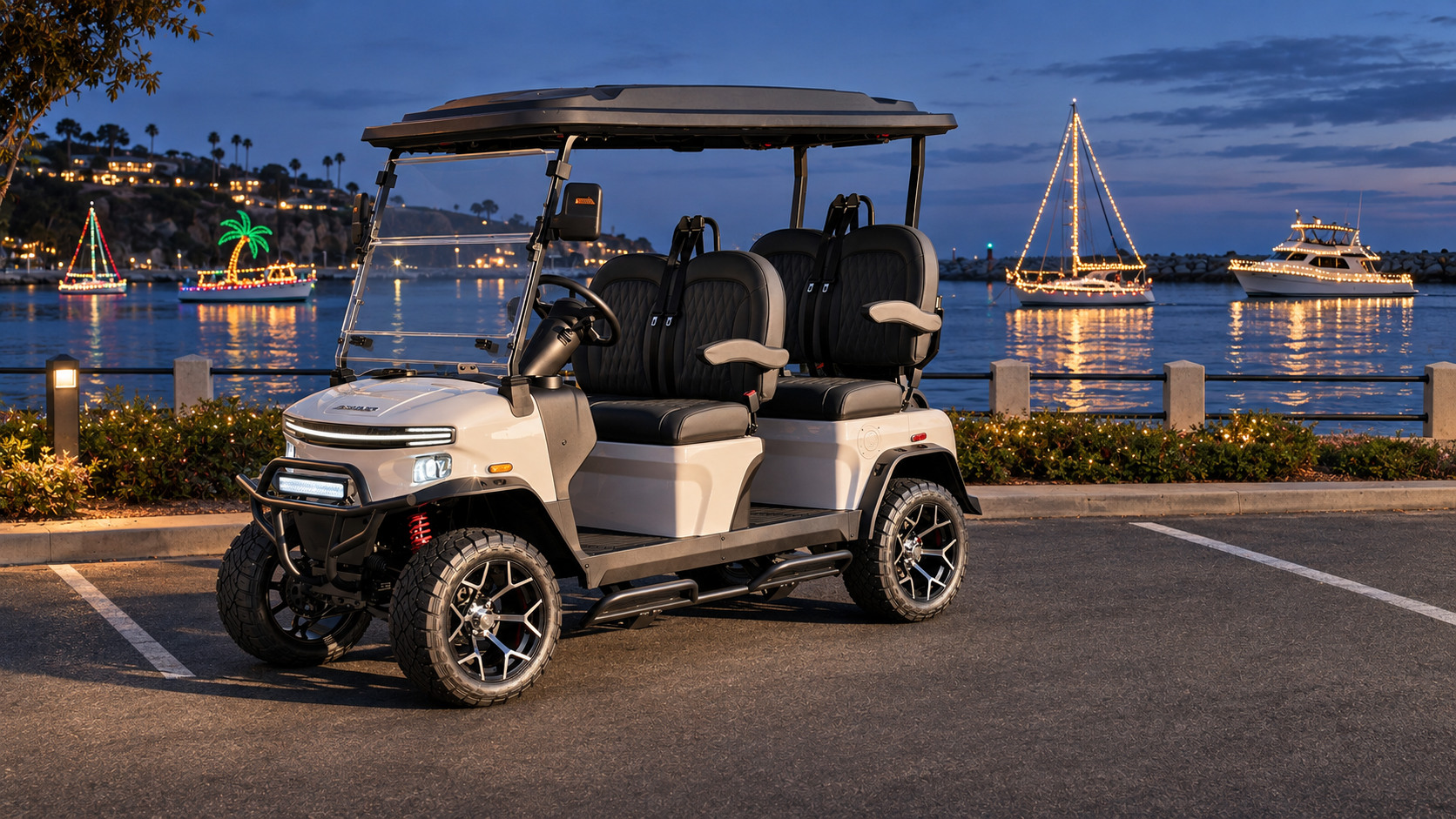
The Denago Rover XL Ultra pairs a 72V lithium battery with an AC motor and power steering. Denago lists the standard Rover XL at 51.2V. If you’re comparing the two, ask for the Ultra by name and try both on the same incline with your usual passengers. For a short, flat route, a 48V-class cart may already do everything you need. Explore the Rover XL Ultra · Standard Rover XL specifications.
Tell us how steep your regular route is and how many seats you fill. We’ll help you choose what to drive side by side. Schedule a Coastal Carts test drive.